
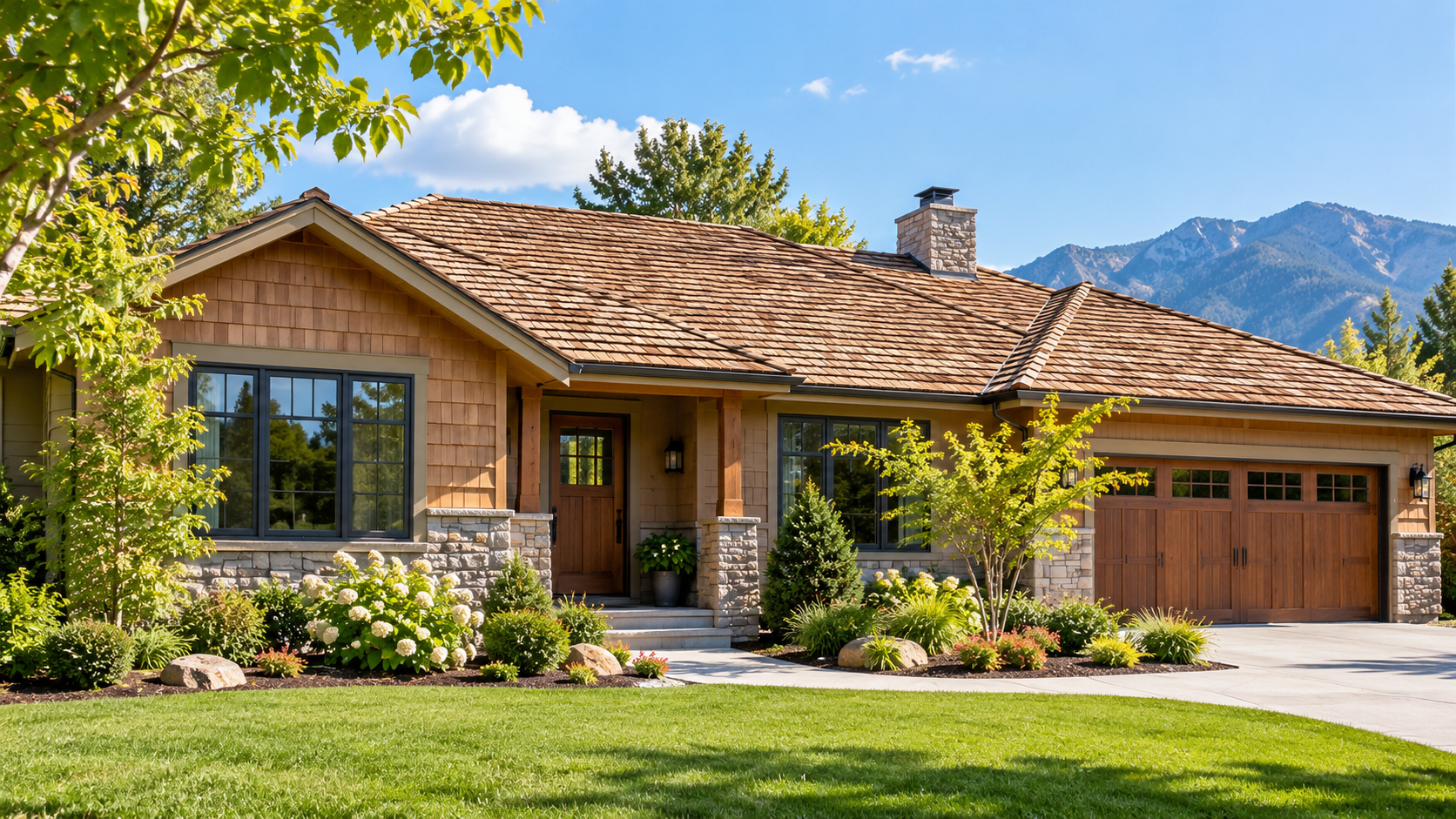
It’s hard to ignore the rustic charm of cedar shake roofs that adorn cabins and mountain homes. You may be thinking of bringing that same character to your own home. Or maybe you’re buying a house that already has cedar shakes, or your existing roof is starting to show its age.
Whatever your situation, one question is bound to come up: How much does a cedar shake roof replacement cost? In this guide, I’ll walk you through the typical costs, what drives the price up or down, and whether cedar shake roofing is worth the investment.
How Much Does It Cost to Replace a Cedar Shake Roof?
Replacing a cedar shake roof typically costs between $10,000 and $26,000 or more. This ballpark estimate assumes a roof size of around 1,700 square feet, which is close to the average residential roof size in Utah.
| Roof Size | Estimated Replacement Cost |
|---|---|
| 1,500 sq. ft. | $9,000–$22,500 |
| 1,700 sq. ft. | $10,200–$25,500 |
| 2,000 sq. ft. | $12,000–$30,000 |
As you can tell, there’s quite a gap between the lower and upper ends of the price range. If we were talking only about the price of cedar shake roofing material, those numbers would be much closer together. A roof replacement, however, is much more than simply installing new cedar shakes. It also includes the following components:
- New roofing system (roughly 35–45% of the total project cost): This includes the cedar shakes themselves, underlayment, flashing, drip edge, ridge components, fasteners, and other materials needed to build a complete weather-resistant roof.
- Installation labor (roughly 35–45%): Labor covers removing the old roof, installing the new roofing system, detailing around chimneys, skylights, valleys, and other penetrations, as well as cleanup once the work is complete. The more architecturally complex your roof is, the higher the labor cost.
- Permits and inspections (typically less than 5%): Depending on where you live, your contractor may need to obtain permits and coordinate any required inspections before the project can be signed off.
- Repairs to the roof deck or structure (varies): Once the old roof has been removed, damaged sheathing or other structural issues may need to be repaired before the new cedar shakes can be installed. This is often what drives the quote up substantially and catches many people off guard. I always tell homeowners to address roof problems early before the damage spreads to the underlying structure and leaves them with a much bigger repair bill.
Cedar Shake Roof Cost per Square Foot
On average, replacing a cedar shake roof costs between $6 and $15 per square foot, or approximately $600 to $1,500 per roofing square (100 square feet).
Cedar shake sits firmly in the premium roofing category. It costs more than asphalt shingles (both the material and installation are more labor-intensive) and is comparable to premium standing-seam metal roofing.
Compared to natural slate roofing, cedar shake is generally the more affordable option.
Factors That Affect Cedar Shake Roof Replacement Cost
Cedar Shake Type
Premium Grade shakes are manufactured from 100% edge-grain cedar with minimal defects, resulting in more uniform pieces with a cleaner appearance and better dimensional stability. Manufacturers have to be more selective about which pieces meet these stricter standards, which is why Premium Grade commands a higher price.
No. 1 Grade shakes, on the other hand, allow for up to 20% flat-grain material per bundle. This less restrictive grading standard means manufacturers can use a greater proportion of the cedar they process. As such, No. 1 Grade is less expensive than Premium Grade.
| Cedar Shake Grade | Typical Characteristics |
|---|---|
| Premium | 100% edge-grain with minimal defects; more uniform appearance and better resistance to warping and cupping |
| No. 1 | Up to 20% flat-grain permitted; less consistent grain orientation across pieces and greater susceptibility to warping or cupping |
Material costs can also vary among shakes of the same grade. Products can be handsplit and resawn, tapersawn, taper-split, or straight-split. Each one offers a different thickness, texture, and appearance, which can affect the price.
It’s also important to recognize that cedar shingles are a separate roofing category from cedar shakes. They’re often confused with one another largely because of their similar appearance. But one important distinction you’ll find is that cedar shingles follow different grading classifications and come at different price points than shakes.
Other Supporting Roofing Materials
A complete cedar roof also needs supporting materials underneath and around it. Your choice of these products gets folded into the total material cost.
- Underlayment: Cedar shake systems commonly use roofing felt between courses to help shed water and keep wind-driven snow and debris from getting beneath the shakes. Depending on the circumstances, you may also need additional eave or valley protection. More roof area means more rolls of these materials and more labor to install them.
- Flashing: Valleys, chimneys, skylights, walls, vents, and other transitions need roof flashing to direct water away from vulnerable joints. A simple gable roof may not need that much, but one with several roof penetrations means more sheet metal to cut, form, and install. Copper flashing can also cost more than standard galvanized steel.
- Caulk and sealants: These are small line items individually, but cedar roofs still require compatible sealants at certain flashing details, ridge vents, and other junctions. The more transitions and penetrations your roof has, the more of this detailing the crew has to complete.
Roof Size
As I pointed out earlier, the larger your roof, the more cedar, underlayment, fasteners, flashing, and labor you’ll need. That is simple arithmetic. However, one mistake homeowners often make when estimating their roof size is assuming it’s the same as their home’s floor area.
A 1,700-square-foot house doesn’t necessarily have a 1,700-square-foot roof. For one, the roof’s slope increases the surface area that needs to be covered.
There’s also the matter of waste. The more complex your roof’s design, the more likely your contractor will need to order additional material beyond the roof’s exact measured area to account for cutting waste. That adds to the overall cost.
Roof Complexity
Roof complexity primarily affects labor. Every time the crew has to stop laying full courses of cedar to measure, cut, flash, or reposition themselves, installation takes longer.
A moderately pitched roof, like those commonly found on traditional ranch-style homes, gives roofers more space to work and move around. As the slope gets steeper, however, moving materials becomes harder, and the increased safety precautions can slow down the work even further.
The job only gets more complicated when the roof has multiple transition points and joints that require additional cutting and flashing.
Tear-Off and Disposal
A single layer of roofing may be easier to tear off compared to one with multiple roof layers. In either case, you’re paying for both the labor to dismantle the existing roof and the cost of hauling it away. The larger and heavier the tear-off, the more this part of the project costs.
Roof Deck or Structural Repairs
This is one of the harder costs to predict before tear-off because the real condition of your roof deck may not be visible until the old roofing is gone.
If the sheathing underneath is dry and structurally sound, the crew can move on to preparing it for the new cedar roof.
If they uncover rotted plywood or deteriorated boards, those sections have to be removed and replaced first. That means paying extra for carpentry labor and materials, and potentially a lot more if the damage has reached the rafters or other structural components.
Permits
Permit costs make up a small percentage of the overall roof replacement cost, but they’re nonetheless an expense you have to account for. The amount varies depending on your location, as different cities and counties have their own fee schedules. Additional costs may also arise if the permit review identifies work that needs to be done to meet applicable building codes.
Depending on the jurisdiction and scope of work, the local building department may review your plans and require inspections before the project is considered complete.
This can get a bit complicated, especially if additional documentation or corrections are required. Fortunately, when you work with a professional roofing contractor who handles permitting, they’ll take care of the applications and coordinate the necessary inspections on your behalf.
Are Cedar Shake Roofs Worth It?
If you’re willing to pay a premium for aesthetics and curb appeal, a cedar shake roof can absolutely be worth it. In fact, appearance is a big reason homeowners choose cedar shakes over more popular and affordable roofing options.
The texture of real cedar is difficult to replicate with manufactured roofing. Handsplit shakes, in particular, have a rough, uneven surface that gives a home a rustic look, much like the distinctive character of cabins, mountain homes, cottages, and traditional architecture.
As real cedar ages, it also weathers from its original warm brown or reddish color into a silvery gray, adding even more to its appeal.
If your priorities lean more toward affordability or minimal maintenance, you have other options. Asphalt shingles cost considerably less upfront. Metal roofing, if properly installed, can offer a long service life without the same concerns about moisture-related decay that come with real wood.
Advantages of Cedar Shake Roofing
Beyond the exceptional aesthetic appeal cedar shakes provide, they also offer other advantages when properly graded, installed, and maintained:
- Durable: Cedar shakes can withstand strong winds and shed rain effectively when installed with the proper slope, exposure, flashing, and drainage details.
- Resistant to many insects and decay: Unlike many other wood species, western red cedar contains compounds that help slow decay and deter certain wood-damaging insects. That’s one of the reasons cedar has long been a popular choice for roofing and other outdoor projects.
- Provides insulation: Being made of wood, cedar shakes have insulating properties that add some thermal resistance to the roof assembly. Of course, proper attic insulation, ventilation, and air sealing are still necessary for an energy-efficient home.
Disadvantages of Cedar Shake Roofing
Beyond cedar shake roofing’s hefty price tag, its biggest drawback is the maintenance it demands. Real wood comes with certain challenges, including:
- Moisture-related decay: Leaves, pine needles, moss, and overhanging trees that create shaded areas can keep moisture against the wood for extended periods. These conditions are ripe for fungal decay, which can compromise the lifespan of a cedar shake roof.
- Requires more attention in humid climates: High humidity comes with additional moisture, which is one of cedar shakes’ biggest enemies. You should regularly check whether drainage paths are clear of any obstructions that could leave the roof damp, and trim tree branches that provide excessive shade.
- Repairs require extra care: A common challenge when maintaining or repairing cedar shakes is that walking on them incorrectly can crack or loosen individual shakes. This can happen even to surrounding shakes while you’re working on a damaged section. It’s worth handing over the work to professional roofers who are familiar with cedar roofing.
- Curling can affect the roof’s appearance: Some degree of weathering is expected and doesn’t automatically mean your roof is failing. That’s simply the nature of wood as it repeatedly absorbs and releases moisture. However, curling stops being a cosmetic issue when it creates gaps that allow water to get underneath the shakes, at which point the affected shakes may need to be replaced.
How Long Does a Cedar Shake Roof Last?
A cedar shake roof can last around 30 years or even longer. In theory, one made from premium-grade cedar shakes can outlast another made from a lower grade. However, the main factor in whether it reaches its intended lifespan is maintenance.
If you have your roof regularly inspected and cleaned, ideally by roofing professionals familiar with cedar shakes, you could have a roof that still does its job and looks fresh even when it’s decades old.
Get a Professional Opinion on Cedar Shake Roof Replacement
A cedar shake roof may look badly curled and deteriorated yet not warrant replacement. The opposite can also be true. It may look perfectly fine from the ground while hiding problems that could already call for a full replacement.
If you’re unsure about the condition of your cedar shake roof, we’re here to help. We can inspect the roof for damage and other problems that could become more expensive if left unaddressed, then determine whether repairs can still buy you more time or a roof replacement makes more sense.
Avail Solar has been serving fellow Utahns in Salt Lake City, West Valley City, West Jordan, Sandy, South Jordan, Herriman, Taylorsville, Draper, Murray, Riverton, Park City, and surrounding areas.
Contact us today to discuss your specific circumstances or learn more about our residential roofing services. You can also request a quote for a cedar shake roof replacement.